July 20, 2026
How to Build a Conversion Funnel That Actually Converts in 2026
Learn to build an effective conversion funnel step by step with practical strategies to attract, nurture, and convert leads into real customers.
How to Build a Conversion Funnel That Actually Converts in 2026
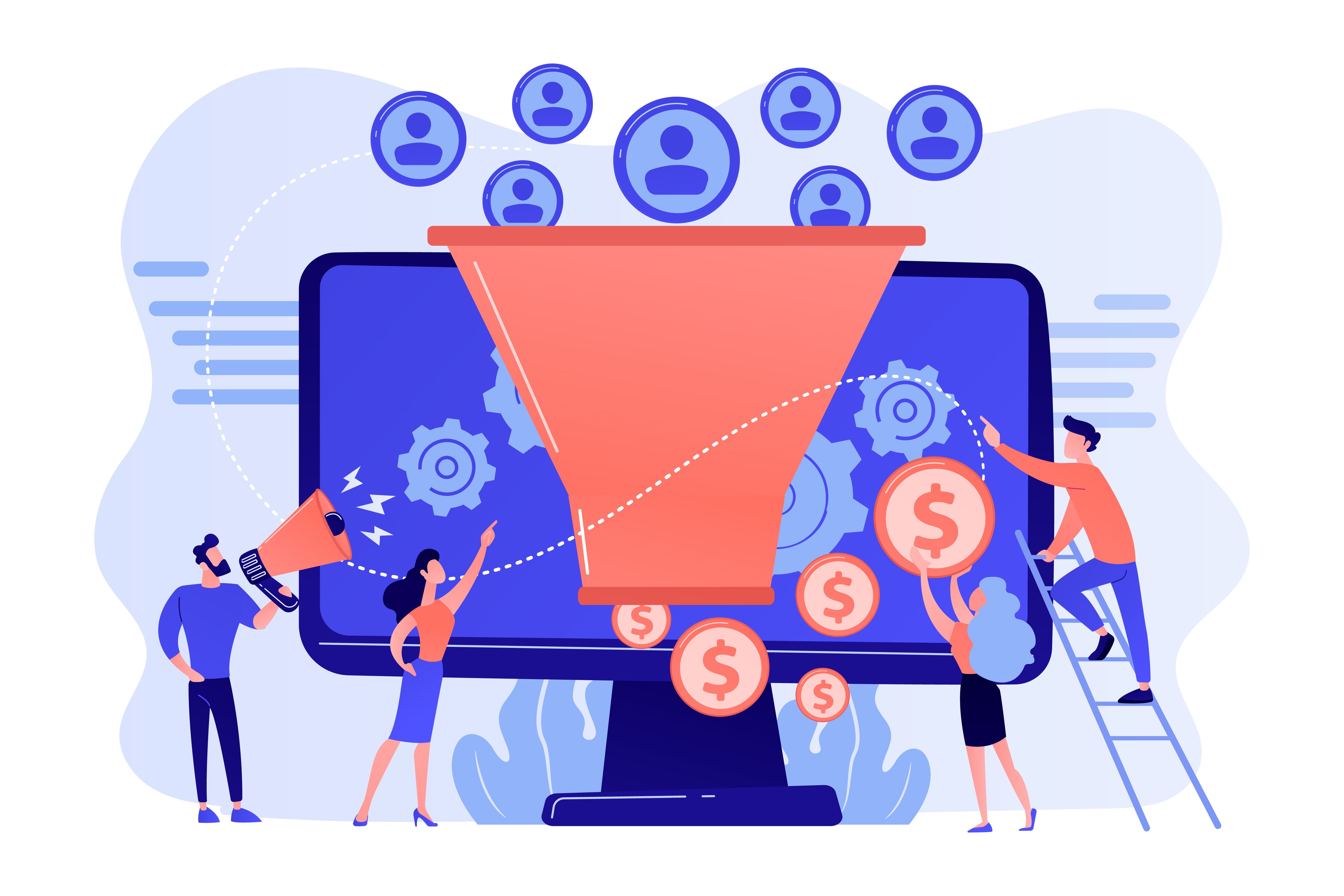
A conversion funnel in marketing is the path a person takes from discovering your brand to completing a valuable action for your business, such as requesting information, asking for a quote, booking an appointment, or making a purchase. Designing a funnel means organizing that journey into stages, understanding what the user needs at each step, and creating the right content, campaigns, and automations to guide them forward.
A good funnel doesn't just generate traffic. It needs to move users from one stage to the next logically, taking them from awareness to action.
If you want to build these kinds of processes strategically, a digital marketing agency can help you organize the user journey and scale conversions sustainably.
What is a conversion funnel
The conversion funnel represents the stages a user goes through before becoming a lead, customer, or buyer. It's called a funnel because typically many people enter at the top, but only a fraction end up taking the desired action.
The conversion depends on the type of business. For an ecommerce store, it might be a purchase. For a B2B company, it could be a demo request. For a clinic, it might be booking an appointment. For a course or training, it could be enrollment.
The key point is that the funnel shouldn't just attract visitors. It must accompany the user from the first contact to the final action, offering the right message at the right time.
Conversion funnel phases
A funnel can be represented in many ways, but a simple and effective structure divides it into three main moments, known as TOFU, MOFU, and BOFU.
Phase → User's situation → Main objective
TOFU → The user discovers a problem or need → Capture attention and spark interest
MOFU → The user researches and compares solutions → Build trust and credibility
BOFU → The user is close to deciding → Convert into lead or customer
TOFU: top of the funnel
At this stage, the user is still discovering the problem. They may not know your brand or have a clear idea of what solution they need. They're not looking to buy, they're looking to learn.
Educational content works well here: informative articles, introductory videos, social media posts, or beginner guides. The goal isn't to sell, but to help the user better understand their situation.
MOFU: middle of the funnel
At the middle stage, the user already understands their problem better and starts comparing alternatives. They know they need something, but they're not yet sure which option to choose.
This is where webinars, case studies, comparisons, downloadable resources, follow-up emails, and content that helps them understand why one solution might fit better than another come into play.
BOFU: bottom of the funnel
At the bottom, the user needs trust, clarity, and a direct call to action. They've already done their research and are ready to decide.
This is where commercial landing pages, personalized demos, contact forms, testimonials, success stories, proposals, limited offers, or strategic calls become essential.
Conversion funnel stages
You can also divide the funnel into more specific stages for finer control over the process.
Stage → What happens → What the user needs
Awareness → The user discovers your brand → Useful, relevant content that answers an initial question
Interest → The user explores further → Clarity about what you offer and demonstrated authority
Consideration → The user compares options → Success stories, social proof, and strong arguments
Intent → The user is close to acting → A clear call to action and sufficient trust
Conversion → The user takes the desired action → A simple, frictionless process
Loyalty → The user stays engaged after converting → Ongoing value and follow-up
This structure helps avoid one of the most common mistakes: asking for conversion too early from users who aren't ready yet.
How to build a conversion funnel step by step
1. Define your primary conversion
First and most importantly, decide what action you want to achieve. It could be a purchase, a contact form submission, a phone call, a demo, or a booking. Without a clear conversion, the funnel has no direction or purpose.
2. Understand the user's starting point
Not all users arrive with the same level of knowledge. Some don't know your brand. Others have already compared options. Others come through direct recommendations. The funnel must account for these different levels of readiness to be effective.
3. Create specific assets for each phase
Many businesses have good awareness content but nothing prepared to convert. Or they have commercial landing pages but don't build enough trust before asking for contact.
A simple example for a service business might be:
- an informative article to attract traffic and generate interest
- a guide or checklist to download and capture contact details
- an email sequence to nurture and educate the lead
- a landing page with a success story to build trust
- a form to request a quote or schedule a call
4. Introduce micro-conversions
Not everyone is ready to buy or contact on their first visit. That's why it's useful to create intermediate actions that allow progress without full commitment, such as downloading an ebook, registering for a webinar, subscribing to a newsletter, or watching a full case study.
These micro-conversions help qualify the user, maintain contact, and guide them through their decision process.
5. Automate follow-up
A funnel works much better with automation behind it. You can send emails based on user behavior, trigger automatic reminders, score leads to prioritize the hottest ones, or route contacts to the sales team at the right moment.
6. Measure and improve continuously
A funnel isn't designed once and forgotten. It needs regular review and adjustment.
Measure visit volume by stage, transition rates between phases, cost per lead, final conversion rate, lead quality, and sales generated. If many people enter but few advance, you need to identify and remove the bottleneck.
Practical conversion funnel example
Imagine a company selling SEO consulting services looking to attract potential clients.
Phase → Specific action
Awareness → Publish an article on how to rank a local business on Google
Interest → Offer a downloadable checklist for a basic SEO audit
Consideration → Send an email with common mistakes and a real success story
Intent → Show a landing page with SEO consulting services and client testimonials
Conversion → Form to request a free audit or initial consultation
Loyalty → Follow-up with additional resources and a roadmap proposal
This funnel example shows how each asset serves a specific purpose. Not everything sells directly, but each piece helps move the user to the next phase.
Common mistakes when creating a conversion funnel
One of the most common mistakes is trying to sell too early, without having built the necessary trust or context.
Another common error is creating content only for the top of the funnel but having nothing prepared for the middle or bottom stages. The result is traffic that enters but doesn't advance.
It's also common not to measure progression between stages. A business might know how many visits it gets, but not how many become leads, how many qualify, and how many end up closing.
The funnel must connect marketing and sales. If marketing generates contacts but sales doesn't work them well or doesn't provide feedback on quality, the system remains incomplete and loses effectiveness.
How Varaschin Design can help with your conversion funnel
At Varaschin Design, we approach funnels from a practical, results-oriented perspective: attract qualified traffic, nurture leads with relevant content, convert with strategy, and measure every step of the process.
We can help you design a conversion funnel tailored to your business, map key stages, create effective landing pages, automate follow-up sequences, improve forms to reduce friction, measure user behavior, align marketing and sales, and optimize final conversion.
If the project needs a broader view of acquisition and growth, we also work from an integrated growth perspective.
Frequently asked questions about conversion funnels
What is a conversion funnel?
It's the journey a user takes from first contact with a brand to completing a valuable action for the business.
How do you build a conversion funnel?
You need to define your primary conversion, understand the user's starting point, create specific content for each phase, introduce micro-conversions, automate follow-up, and measure progression continuously.
What are the stages of a conversion funnel?
The most common stages are awareness, interest, consideration, intent, conversion, and loyalty.
What's the difference between funnel stages and content?
Stages describe where the user is in their decision process. Content is the tool that helps move them from one phase to the next.
Do all businesses need a conversion funnel?
Yes, though not all with the same level of complexity. If you want to convert more visitors into customers, you need to organize the user journey and guide them strategically.
Conclusion
The conversion funnel isn't just a nice marketing theory. It's a real structure for turning interest into tangible results. The clearer you are about what the user needs at each moment, the better your chances of moving them toward the desired action.
And the better you measure that journey, the easier it becomes to spot improvement opportunities and optimize every step of the process.
If you want to build a funnel connected to business results rather than just surface metrics, Varaschin Design can help you design, activate, and continuously improve it so it truly adds value to your acquisition strategy.
Written by
Michel Varraschim
Michel Varraschim is the CMO at Varaschin design, where he leads marketing, growth, and brand positioning strategies with a clear mission: turning business objectives into scalable action plans that d...
Share this article
You might also like

August 24, 2026
Google Ads for Black Friday 2026: Professional Strategies for Successful Campaigns
Preparing Google Ads campaigns for Black Friday 2026 requires early planning, solid structure, and continuous optimization. Learn professional strategies to maximize sales and ROAS with Varaschin Design.
Read article →
August 12, 2026
Creative Campaigns for Black Friday 2026: Stand Out and Sell More
Creative Black Friday campaigns that stand out from the crowd. Learn 10 proven strategies to connect with your audience, boost sales, and build brand impact with Varaschin Design.
Read article →
August 03, 2026
Generative Engine Optimization: The Complete Guide to Dominating AI Search in 2026
Learn how Generative Engine Optimization positions your brand in AI responses like ChatGPT/Gemini/Claude. Discover strategies to convert readers into clients.
Read article →